
Pelvic Floor Dysfunction and Constipation: How Are They Linked?
POSTED: 15 Sep, 2026
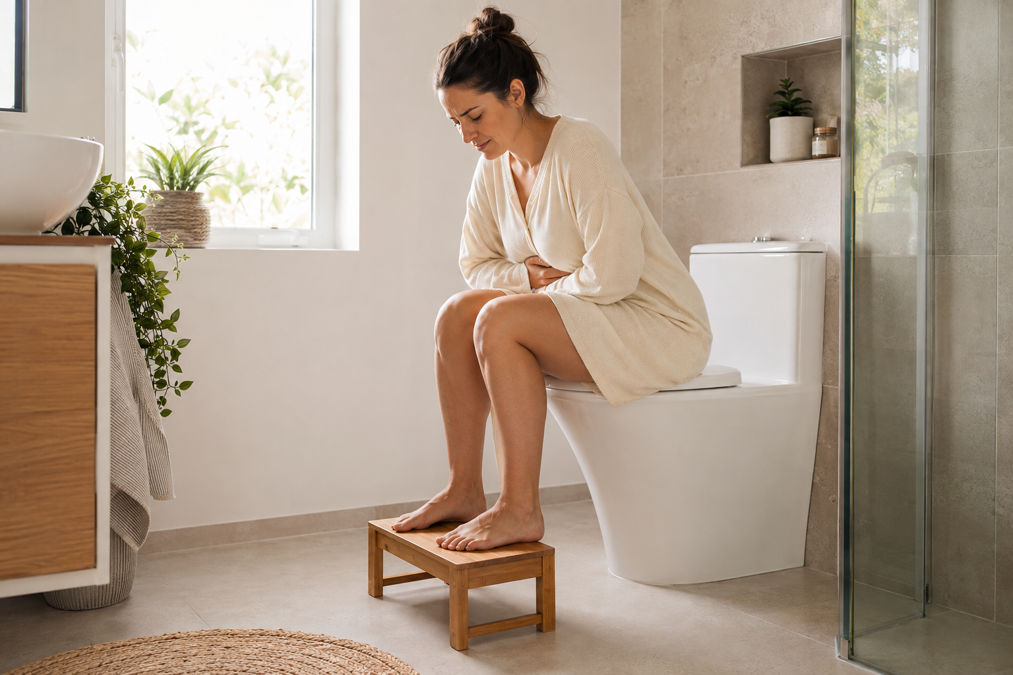
Constipation is not only a digestive issue. Passing a bowel motion requires the abdominal muscles, diaphragm and pelvic floor to work together. When stools are hard, bowel motions are infrequent or emptying requires repeated straining, this coordination can become more difficult.
For some people, constipation and pelvic floor dysfunction occur together. The pelvic floor may have difficulty relaxing during a bowel motion, or repeated straining may aggravate pelvic pressure, heaviness, pain or prolapse symptoms.
How the Pelvic Floor Supports Bowel Emptying
The pelvic floor supports the bladder, bowel and pelvic organs and helps maintain continence. During a bowel motion, however, these muscles need to lengthen and relax while pressure from the abdomen helps move stool through the rectum.
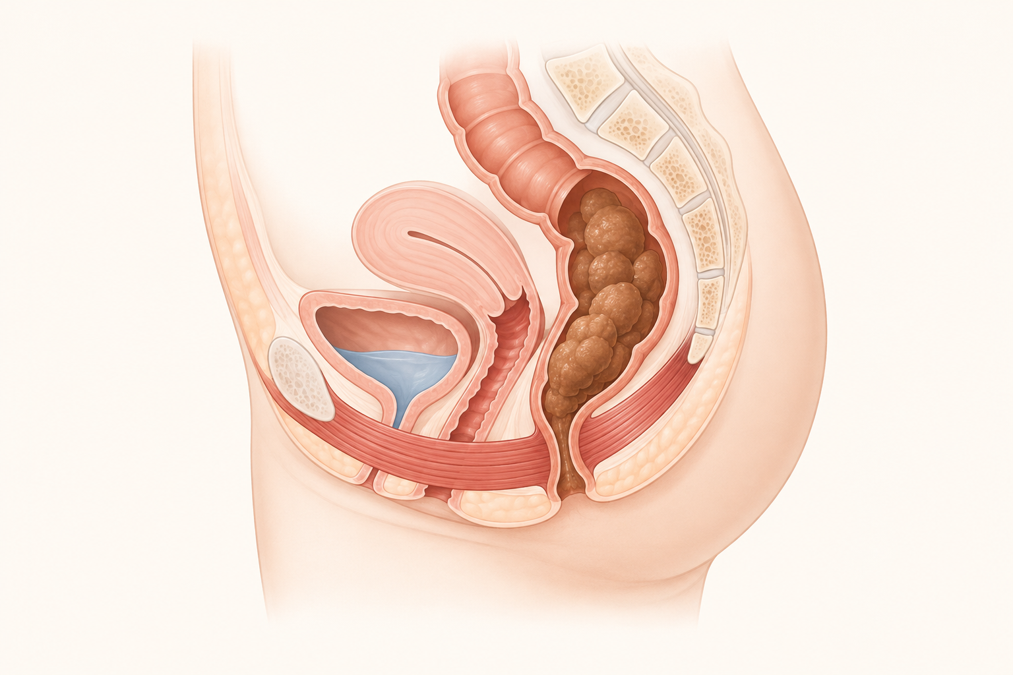
If the pelvic floor contracts instead of relaxing, or does not relax sufficiently, emptying may feel blocked or incomplete. This is often described as a defecatory disorder or dyssynergic defecation.
Common signs may include:
- Straining during bowel movements
- Spending a long time on the toilet
- Feeling that the bowel has not emptied completely
- Returning to the toilet repeatedly
- Using the fingers or vaginal support to assist emptying
Research by Bharucha and Lacy (2020) explains that constipation can have different causes, including slow bowel transit and difficulty coordinating the muscles involved in emptying. This is why constipation treatment should be based on the individual cause rather than assuming everyone simply needs more fibre.
How Constipation May Affect Pelvic Floor Symptoms
Repeated straining increases pressure through the abdomen and pelvic cavity. Constipation does not automatically cause pelvic floor dysfunction, but it can aggravate symptoms when the pelvic floor muscles or pelvic support tissues are already under strain.
Possible symptoms include:
- Difficulty starting or completing a bowel movement
- A sensation of incomplete emptying
- Pelvic floor or anal pain during or after bowel movements
- Pelvic heaviness, pressure or vaginal bulging
- Urinary urgency, leakage or difficulty emptying the bladder
- The need to strain or use manual support to empty the bowel
Constipation has also been identified as one of several factors associated with pelvic organ prolapse. A systematic review and meta-analysis by Fitz et al. (2023) found an association between constipation and prolapse. However, prolapse can also be influenced by childbirth history, age, body weight, connective tissue and other factors.
How Pelvic Floor Physiotherapy May Help
Pelvic floor physiotherapy begins by identifying what is making bowel emptying difficult.
An assessment may consider:
- Bowel frequency and stool consistency
- Toileting position and straining habits
- Breathing and abdominal pressure management
- Pelvic floor muscle relaxation and coordination
- Symptoms of pain, pressure or incomplete emptying
Treatment is individualised and may include:
- Education about normal bowel function and stool consistency
- A more effective toileting position and emptying technique
- Breathing strategies to reduce unnecessary straining
- Pelvic floor relaxation and coordination training
- Biofeedback or other retraining strategies when appropriate
- Advice about physical activity, fluid and fibre intake
- Medical or dietetic referral when required
Pelvic floor treatment is not always about strengthening. If the muscles are overactive or poorly coordinated, treatment may initially focus on learning to relax and lengthen the pelvic floor during bowel emptying.
Research by Wallace et al. (2019) describes pelvic floor physiotherapy as functional retraining that may address strength, endurance, relaxation and coordination according to the person’s individual presentation.
For people with a confirmed defecatory disorder, anorectal biofeedback may also be helpful. Bharucha and Lacy (2020) report that these conditions often respond to biofeedback-based retraining.
When Should Constipation Be Medically Assessed?
Please speak with your GP if your constipation is new, persistent or worsening. Seek medical advice promptly if you notice bleeding, unexplained weight loss, significant pain or other concerning changes.
An Individualised Approach Matters
Constipation can be influenced by stool consistency, medication, diet, bowel transit, pelvic floor coordination or a combination of factors. The most appropriate treatment therefore depends on what is contributing to your symptoms.
At Pelvic Prime & Physiotherapy, we assess pelvic floor function together with bowel-emptying habits to develop an individualised management plan.
If constipation is contributing to pelvic pain, pressure, prolapse symptoms or difficulty emptying, a pelvic health physiotherapy assessment can help identify an appropriate treatment approach.
Book a Pelvic Health Assessment
If constipation is affecting your pelvic health, contact Pelvic Prime & Physiotherapy in Brisbane to arrange a personalised pelvic floor and bowel assessment.
Research Sources
Bharucha AE, Lacy BE. (2020). Mechanisms, evaluation, and management of chronic constipation. Gastroenterology, 158(5), 1232-1249.e3.
Fitz FF, et al. (2023). Lifestyle and comorbidities as risk factors for pelvic organ prolapse: a systematic review and meta-analysis. International Urogynecology Journal.
Wallace SL, Miller LD, Mishra K. (2019). Pelvic floor physical therapy in the treatment of pelvic floor dysfunction in women. Current Opinion in Obstetrics & Gynecology, 31(6), 485-493.
Booking with Pelvic Prime & Physiotherapy